There is much to consider in the Epistle of S. Paul. While it may seem that there is a jumble of teachings, in fact there is a single link to bring each one together. This link is found in Philippians 2.12 with these words: “Work out your own salvation with fear and trembling.” With awe, wonder, and trembling, take up your salvation, he tells the Church. Now, “salvation” means health, specifically it means spiritual health. Thus Paul’s teaching is: “Work on your spiritual health, and do so with awe, wonder, and trembling before God.” By our work we will no longer be idolators, or sexually immoral, or habitual sinners. Instead we will be transformed by the Gospel, by Christ, by His grace.
Salvation in heaven begins with working towards spiritual health in this life. And yet this working towards, or working out, of salvation means specifically our cooperation with the grace God gives to the baptized as our daily Bread: Eucharist, as well as that of Scripture, which make Christ known. The invitation Christ makes in John 1.39–“Come and see”—is the invitation to find Him in the opening of Scripture and to find Him in the Breaking of Bread. All of Scriptures (the books of Moses, the Prophets, the Psalms) are about Him, Jesus taught; and the consecrated Bread and Wine are His Precious Body and Blood. He is our salvation. So our working out of our spiritual health is the life of looking for Him in Scripture and Eucharist, and finding Him, and being fed by Him, transformed by Him, made holy by Him.
Paul also teaches provocatively in his epistle. Paul tells us that while the children of Israel ate the same spiritual food, and drank from the spiritual Rock that followed them, and that the Rock was Christ. He identifies in no uncertain terms the God of the Israelites as Christ. He says that the grace of Christ was available to the children of Israel following Moses. Nevertheless with most of them God was not pleased. God was not pleased because most of the children of Israel did not cooperate with the grace Christ made available to them. Instead of choosing Christ, they choose idolatry, the pineapples of sexual immorality, and disobedience of all kinds. God showed great tolerance for their sinfulness. God knows our human condition, for He is our creator. Paul as well emphasizes that God does know that we face temptations, and that God allows us to face temptations, to learn to endure them and to learn through the struggle how to choose God by cooperating with His grace, rather than our normal fleshly tendency to kick against the goads.
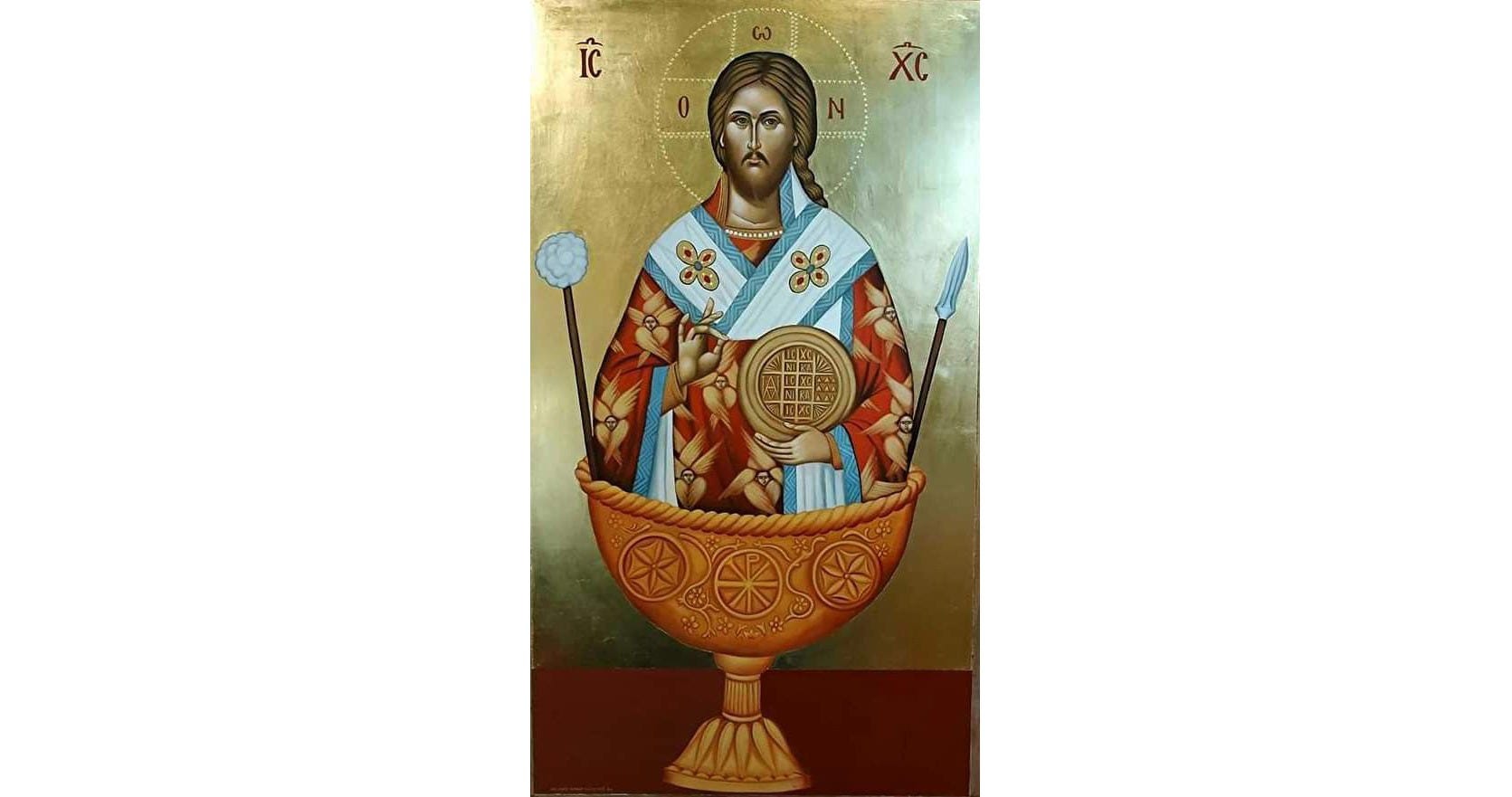
What Paul intriguingly presents in this passage as the remedy for our salvation is the Eucharist. Just as the children of Israel drank from the spiritual Rock which was Christ, we drink and eat Christ in the Eucharist. And this for Paul is the process of working out and towards spiritual health, week in and week out. He says, “The cup of blessing that we bless, is it not a participation in the blood of Christ? The bread that we break, is it not a participation in the body of Christ?” We find salvation, we find spiritual health, by means of the Eucharist, of Holy Communion, by means of receiving Christ’s precious Body and Blood.
Receiving the Eucharist, for Paul, is not an option, but necessary for finding spiritual health. And again, eternal salvation in heaven begins with us receiving the Eucharist in this life. Being regular in receiving the Eucharist is part of our labor and work. This is attested to by the 3rd century Church Father, S. Cyprian of Carthage in his teaching on the Our Father prayer. S. Cyprian writes “Jesus makes it clear that those … who receive the Eucharist … are those who live.” “We ask that we be given our bread, that is Christ,” Cyprian says, “so that we may remain in Christ, and live through His sanctification”—live, that is, through the holiness and transformation fostered by the Eucharist received regularly.
Our Lord also teaches on salvation, and does so cryptically, because it is told as a parable. In this parable of the shrewd servant, the servant cheats his master to make friends with the tenants. And, Jesus said, “The master commended the dishonest manager for his shrewdness.” We would expect the master not to do so. Yet Our Lord’s parable finds light in the darkness, and teaches righteousness through an example of iniquity. The deeper message of this parable is that the children of Light, that is, the members of the Church, should regard their salvation with the level of priority as the children of this world do their worldly goals of wealth, fame, and possessions; as they struggle and fight for those, we should struggle and fight for our salvation. The seriousness with which the dishonest servant takes his cheating is an exact description of what God expects of the children of light, in order to obtain a far more important, an infinitely greater, and more noble object–spiritual health, the uprooting of sinful habits.
And so, again, eternal salvation involves our work and our labors in this life to uproot out of our heart anything that gets in the way of our love of God revealed in Jesus Christ. We do this work and labor by cooperating with the grace of the Eucharist—of Christ in us, sacramentally—and by keeping commandments of God and the faith of Jesus, which He gave us as the gift of Himself in His Passion, Death, and Resurrection, which is living eucharistically. We are to love God and love our neighbor like Christ loves us, and our work is to replace our unholy habits with holy habits that render our love for God and neighbor so robust that in our love, people see Jesus Christ Himself.
Therefore towards our end which is heaven, and eternal salvation in Christ, let us indeed work out our own salvation with fear and trembling, and do so through the daily Bread which is Christ: revealed in Scripture and received in the Eucharist, cooperating with His grace by keeping of Christ’s word and commandments, which enable us to do all such good works as God has prepared for us to walk in, through Jesus Christ our Lord, Who gave Himself for us and for our salvation; He Who lives and reigns with the Father in the unity of the Holy Ghost, ever one God, world without end. Amen.


