The octave or eight day period of the celebration of all the All Saints is when we focus on the stars that shine brightly in the firmament of heaven. As Origen of Alexandria teaches, “Moses is a star in us, which shines and enlightens us by his acts. And Abraham, Isaac, Jacob, Isaias, Jeremias, Ezechiel, David, Daniel, and all to whom the Holy Scriptures testify that they pleased God.” As I said last Sunday, they shine brightly because the Lord apportioned to them great glory. By God’s activity in them, the divine majesty of Christ shines. We celebrate those to whom Christ has revealed Himself in such powerful ways that these Saints became bearers of wisdom, bearers of truth, bearers of how to live according to the way of Christ. While on the 2nd day we rightly and soberly commemorate the souls of the faithful departed and pray to Christ for them (as Saint Martha prayed to Jesus for her brother Lazarus), the rest of the Octave is given over to those whose names live to all generations in the Church. This past Wednesday we commemorated our patron Saint Paul and reflected on his holy doctrine. In the second Collect a short while ago we remembered the many Anglican Martyrs, Divines, Fathers, Mothers, Missionaries, and other Anglican Saints, and we asked God to have fellowship with them in heaven. All God wants is the human heart: the Saints show us what the life of a heart given to God looks like.
One of the images the New Testament uses to describe how God regards us is that of a coin. We see this for example when Our Lord Jesus speaks His parable of the kingdom of heaven in which He says it is like a woman with ten coins, who lost one – which when found was a cause for rejoicing by her and the angels. The 7th century Church Father, S. Gregory the Great, known as the apostle to the Anglicans and who is a huge influence upon all of western Christianity, gave his immense voice and interpretation to the Parable of the Lost Coin. S. Gregory sees the woman as representing Holy Church (in Paul’s teaching in Gal. 4.26: “the Jerusalem above is free, and she is our mother”), the nine coins being the nine orders of Holy Angels, and the tenth coin, the one lost, being humanity, all human beings, lost because of sin. S. Gregory taught the people of God to understand ourselves as a coin: God’s coin, of immense value because the coin is His.
We have the coin image also from our Gospel passage today. Jesus asks for and is given a coin by the Pharisees. He then asks, “Whose likeness and inscription is this?” They were trying to entangle Jesus, so that they would have grounds to arrest Jesus, who had become a popular figure in and around Jerusalem. If they could get Jesus to say, “Don’t pay taxes,” then they would have the grounds they were looking for. By this time, Our Lord is quite used to the Pharisees trying to trick Him. And He often responded to their question with another, deeper question, His question undermining their question and disabling it, showing it to be superficial, showing it to be a red herring, a distraction from their real purpose, which was to arrest Him. Jesus asking, “Whose likeness and inscription is this?” forced them to answer. Jesus, as they say, put the ball back into their court. Something, unto itself, which is a teaching to us: when we feel someone is asking what on the surface is an innocuous question, but that we suspect malevolent intent, respond not by answering but by asking a question.
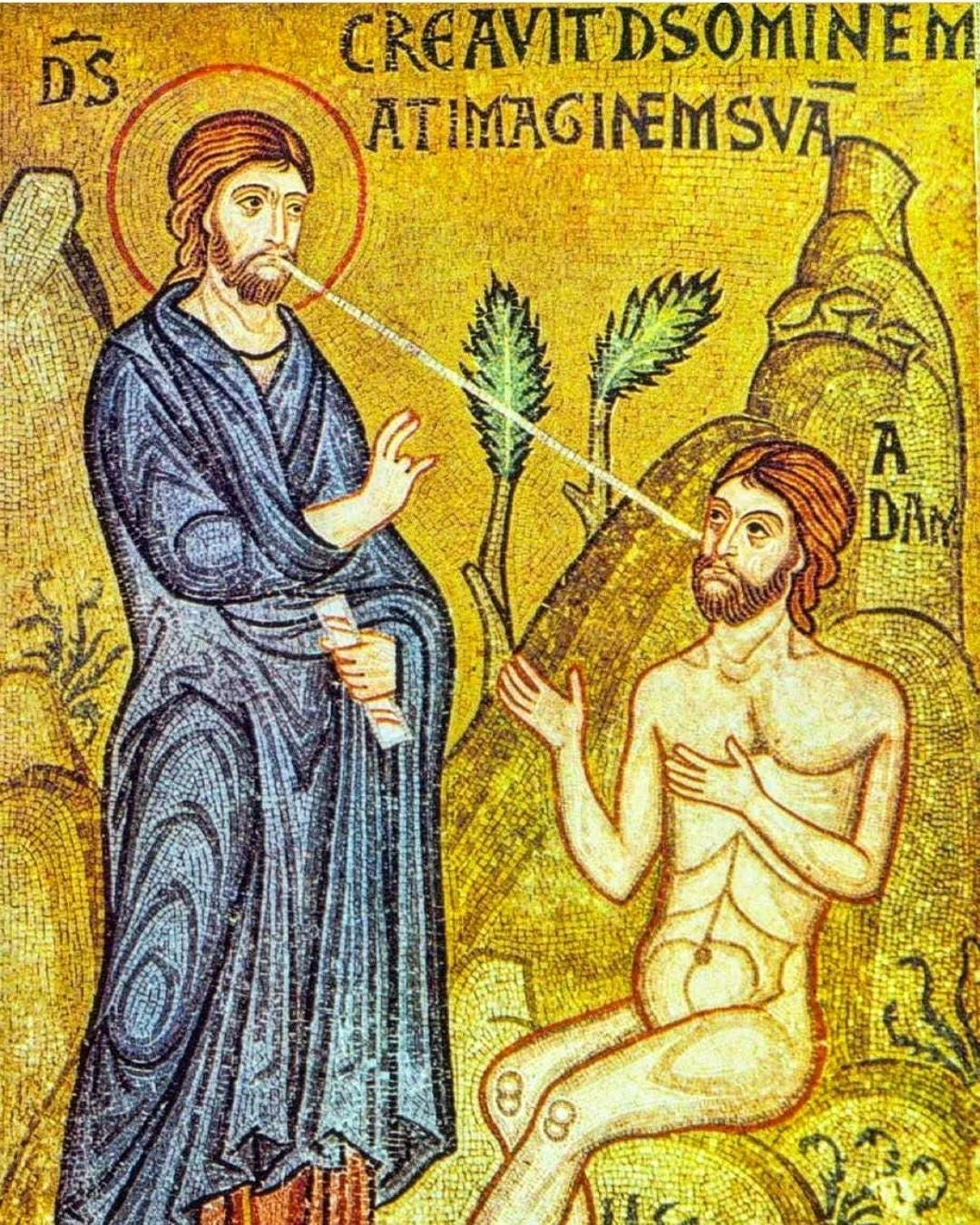
Yet Our Lord’s question has has a still deeper significance. In effect, Jesus is asking, “Whose image and writing is this?” The answer to that question, of course, is Caesar’s image and Caesar’s inscription, making it to be a product of the Roman empire. And because of that, the coin goes to Caesar. But, if we are God’s coin, then whose image and inscription is written upon us? Are we not in God’s image, and His image in us? Did not God write His law upon us, made in His image? Jeremiah 31:33 records God as declaring: “I will put my law within them, and I will write it upon their hearts; and I will be their God, and they shall be my people.” So if things are to be given to those whose image is on the thing, then, yes, render therefore to Caesar the things that are Caesar’s, and to God the things that are God’s. This is why they marveled: the Pharisees were outdone by the Word of God.
We are a coin lost, searched for, and when found, rejoiced over. We are a coin, made by God. We are God’s coin. God made us so that we would of our free will choose to offer ourselves back to Him, the Maker of all creatures great and small, the maker of heaven and earth, of all things seen and unseen. It was what our patron Saint Paul means by being a living sacrifice his famous and holy doctrine from his epistle to the Romans, chapter 12 and onwards: and which Anglican liturgy takes up completely: “and here we offer and present unto Thee, O Lord, our selves, our souls and bodies, to be a reasonable, holy, and living sacrifice.” We are a coin, and we are offered to God as the poor widow offered her two mites to God. To offer to God our time, our talent, and our treasure is simply “our selves, our souls and bodies” put into different words. It is why Saint Luke recorded in the Acts of the Apostles the account of Ananias and his wife Sapphira, who sold a piece of property. They kept back some of the proceeds, and Saint Peter regarded this was Satan filling the heart to lie to the Holy Spirit. We are told by Saint Luke that both fell dead, because of their greed and as well as deception against Holy Church. It is a dramatic story, which comes in the fifth chapter of Acts. It is a dramatic story, but the very least it should teach us is that knowingly holding back of our time, talent, and treasure from the Church is something God sees, for God is He unto Whom all hearts are open, all desires known, and from Whom no secrets are hid—holding back from the Church that which God knows we have available to offer, but choose not to, God regards negatively, and pulls His active presence away, so as to cause at least spiritual death, which is what we call the way of life in which God pulls His presence away, leaving us cold in our spiritual life.
My dear brothers and sisters: All God wants is our heart. When we know that God made us so that we would of our free will choose to offer ourselves back to Him – to offer whatever time, talent, and treasure we have available back to God becomes an expression of who we truly are. And what’s more, to know that we all must one day give account to God, as to whether we have been faithful stewards of the bounty of time, talent, and treasure God has given to us, attests to our true identity. We are God’s coin. His image is written on our heart. Hence, we honor God by our stewardship. We honor the Church by our stewardship. We honor the unfathomable gift of eternal life given to us by the sacrifice of Jesus Christ in His Incarnation as well as in His Crucifixion by our stewardship. We are made in God’s image, His image is upon us, and His Holy Spirit has written upon our hearts. We are God’s, that as poor as we might be, we are always able to give our heart. Let us imitate the Saints and willingly and endlessly give our heart to Jesus Christ, our Lord and Saviour, Who lives and reigns with the Father in the unity of the Holy Ghost, ever one God, world without end. Amen.


