One of the themes of my preaching and teaching that I emphasize is how God makes the human being. This comes directly from Scripture, in Genesis chapter 1, on the sixth day of creation, we have the words: “God said, ‘Let us make man in our image, after our likeness.” Here God begins the project of making man, of making, in fact, the human image of God. Saint Paul calls this making in Genesis 1 “the first Adam.” That word “adam” means both a singular male, and it means all of humanity as such. We need both meanings to properly understand this Scripture, and particularly to properly understand what God is doing when He says, “Let us make man in our image, after our likeness.”
The two meanings align with the literal and spiritual interpretations of this passage. In the literal sense of this passage, God makes a singular male human being: “Let us make a man.” Yet in the spiritual sense of this passage, God is saying “Let us make humanity itself.” And in this spiritual sense, “Let us make humanity itself” shows us that God began the project of making the human image of God in Genesis, and completed this project, brought it to perfection and consummation, on the Cross in Jesus Christ crucified, which Christ Himself confirms when He says “It is finished.” It is attested by Saint Paul who calls Jesus Christ “the last Adam.” What is finished is the project of revealing to the world the human image of God, the making of humanity after God’s image. Christ on the cross is the image of the fullness of humanity made in the image of God. Christ on the cross is the full revelation of sacred humanity. Instead of the beastly humanity which is the natural condition of all human beings who are lost and alienated from God, Christ shows the sacred humanity available to all who deny themselves, take up their cross, and follow Him. This is the Gospel revealed by Christ.
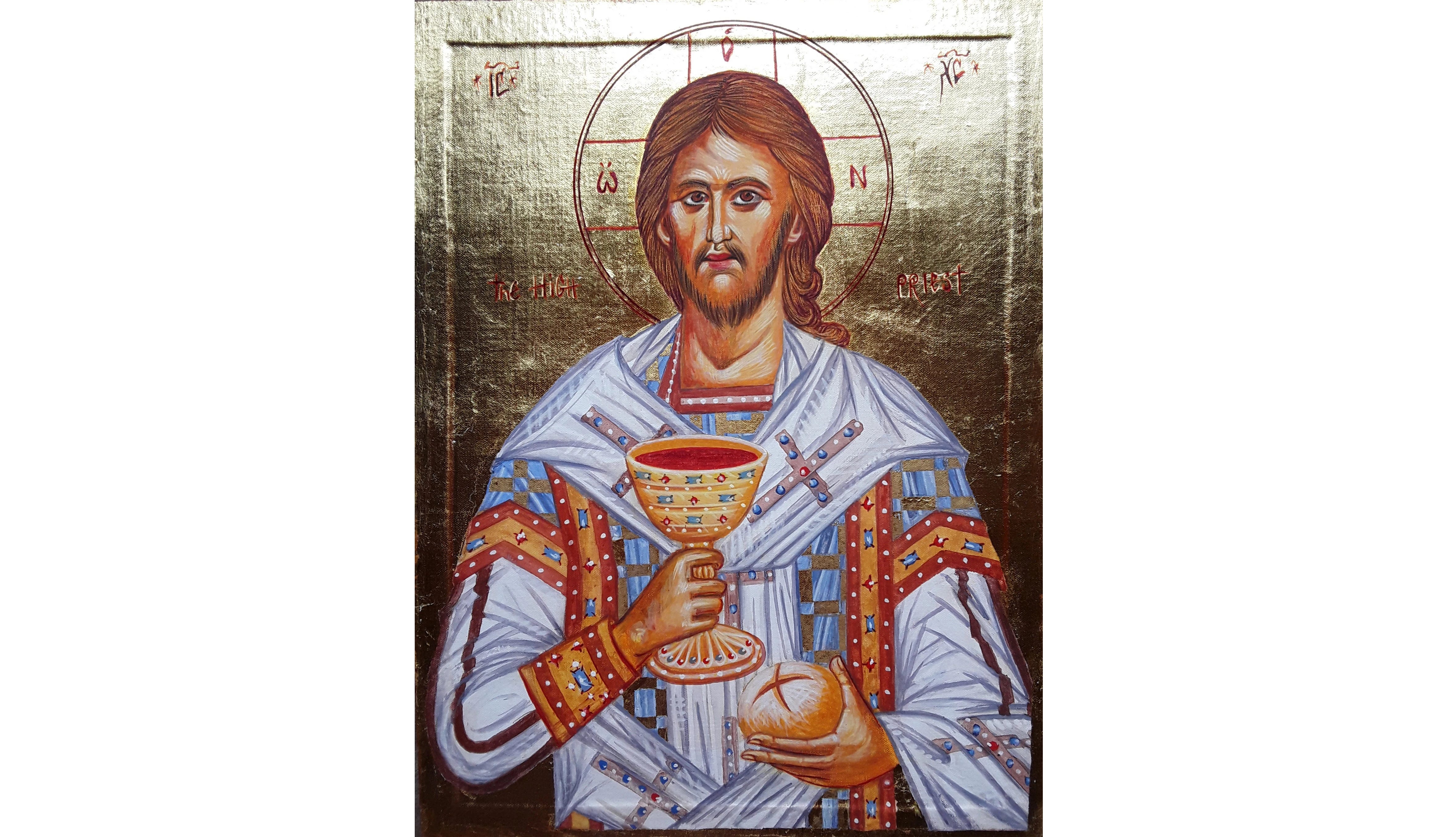
There are many directions I could go with this teaching and the implications of this teaching, this fact of God’s regenerating power. The one I want to emphasize in this sermon is the implication for us, the implication for human beings—for the sacred humanity revealed in its fullness on the Cross is the sacred humanity God desires us to have; the sacred humanity God desires us to achieve through our cooperation with His unbounded grace. As Christ says to Moses in Exodus 19.6: “You shall be to me a kingdom of priests and a holy nation.” Saint Peter himself elaborates on this with his words: “You are a chosen race, a royal priesthood, a holy nation, God’s own people, that you may declare the wonderful deeds of him who called you out of darkness into his marvelous light.” To paraphrase the song of the 24 elders and the four living creatures in Revelations 5: “Christ has made us a kingdom and priests to our God, and we shall reign on earth.”
All of this is what Saint Paul is talking about in our Epistle. He writes: “Such is the confidence that we have through Christ toward God. Not that we are sufficient in ourselves to claim anything as coming from us, but our sufficiency is from God, Who has made us sufficient to be ministers of a new covenant, not of the letter but of the Spirit.” Of ourselves alone, we can do nothing good from our mere beastly humanity. This is the life of the flesh that Paul teaches about, and humility demands that we acknowledge that we are not sufficient in ourselves to claim anything as coming from us. Rather, everything we have is from Christ: our sufficiency is from God.
We see this in our readings, first in the dialogue between Moses and God. Moses says, “Oh, my Lord, I am not eloquent . . . I am slow of speech and of tongue.” In his beastly, natural humanity, Moses is utterly unable to do what God commands him, which is to speak to the children of Israel as their leader. But Christ assures Moses, saying “Who has made man’s mouth? . . . I will be with your mouth and teach you what you shall speak.” Moses is made sufficient by what he receives from God: everything he has is from Christ, is gift of Christ. And because of this, Moses is able to fulfill his role in God’s plan for salvation. Secondly we see this as well in our Gospel account. Before Jesus was brought a man who was deaf with a speech impediment. Christ anointed the man with His mercy, and by this anointing grace his ears were opened, his tongue released, and he proclaimed the Gospel of salvation in Christ—that is, of spiritual health in Christ.
My dear brothers and sisters, we are Moses, and we are the deaf man. In our beastly, natural condition, we cannot speak holy words. But because of Christ we know the words of heaven, which we say in the Liturgy and in prayer: in the Liturgy and in prayer, Christ is our mouth and He teaches us what to speak. And in our beastly, natural condition, we cannot hear God speaking to us through the heavenly choir of angels, but when Christ opens the ears of our heart, we can hear them sing “Holy, holy, holy.” Our beastly humanity is transformed into sacred humanity.
Our sacred humanity is our natural state infused with Christ’s grace, which equips us for the work of ministry, for building up the body of Christ. By His grace, we are able to fulfill our role in the royal priesthood. Given the words to speak, and the actions to do, we are able to offer our sacrifice of praise and thanksgiving; we are able to live with virtue and self-surrender; we are able to pray, we are able to do works of mercy. And we are able to receive the Eucharist, which is our spiritual food that feeds us with Christ’s mercy which makes possible God’s plan for us to show forth the human image of God as living stones built into a spiritual house, truly participating in Christ because we are equipped by Christ, Who is our true foundation, the Eternal Word and Son of God, Who lives and reigns with Him in the unity of the Holy Ghost, ever one God, world without end. Amen.


