In the audio provided, both lessons are read, and then followed by a homily by yours truly.
A Lesson from the Gospel according to S. Luke, 16.1
Jesus also said to the disciples, “There was a rich man who had a manager, and charges were brought to him that this man was wasting his possessions. And he called him and said to him, ‘What is this that I hear about you? Turn in the account of your management, for you can no longer be manager.’ And the manager said to himself, ‘What shall I do, since my master is taking the management away from me? I am not strong enough to dig, and I am ashamed to beg. I have decided what to do, so that when I am removed from management, people may receive me into their houses.’ So, summoning his master’s debtors one by one, he said to the first, ‘How much do you owe my master?’ He said, ‘A hundred measures of oil.’ He said to him, ‘Take your bill, and sit down quickly and write fifty.’ Then he said to another, ‘And how much do you owe?’ He said, ‘A hundred measures of wheat.’ He said to him, ‘Take your bill, and write eighty.’ The master commended the dishonest manager for his shrewdness. For the sons of this world are more shrewd in dealing with their own generation than the sons of light. And I tell you, make friends for yourselves by means of unrighteous wealth, so that when it fails they may receive you into the eternal dwellings. One who is faithful in a very little is also faithful in much, and one who is dishonest in a very little is also dishonest in much.
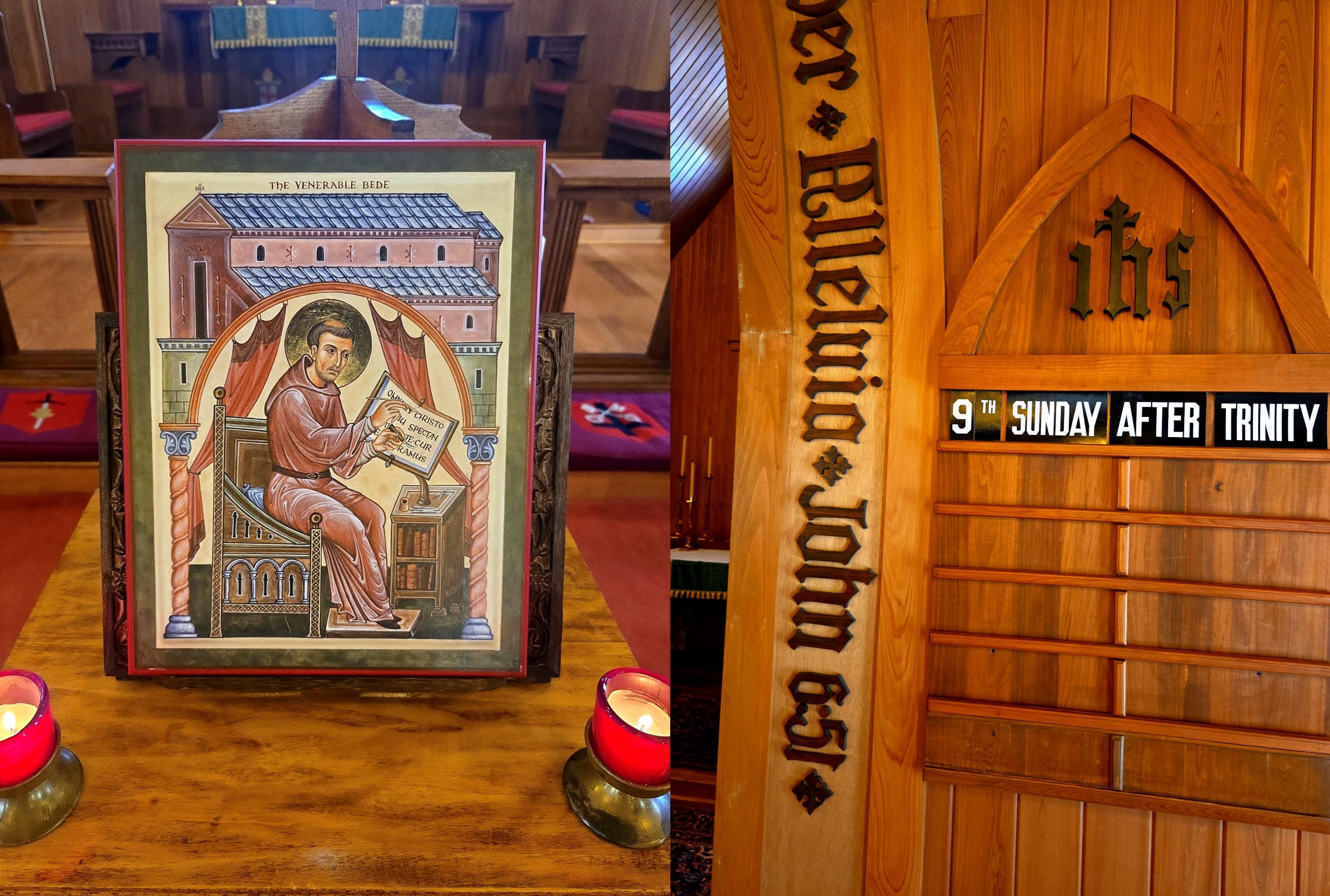
A Lesson of Commentary by the Ven. S. Bede
There are those who know nothing of the innermost feelings of compassion and the works of mercy which are owed to their neighbours, and yet nevertheless consider themselves truly faithful because of their chastity, vigils, prolonged prayer, full faith, fasting, and other virtues that the love of God is accustomed to engender. But, as the Judge Himself attests, “One who is faithful in a very little,” that is, in the riches that ought to be shared with the poor man, “is faithful also in that which is greater,” namely in that impulse by which he desires specially to cling to the Creator and to become one spirit with Him. But he who neglects to dispense the temporal things that he possesses in the right way, deprives himself of the glory of eternal things about which he boasts. As Saint John says, “He who does not love his brother, whom he sees, how can he love God, whom he does not see?” (1 John 4.20) And as the same says: “If any one has the world’s goods and sees his brother in need, yet closes his heart against him, how does God’s love abide in him?” (1 John 3.17)


