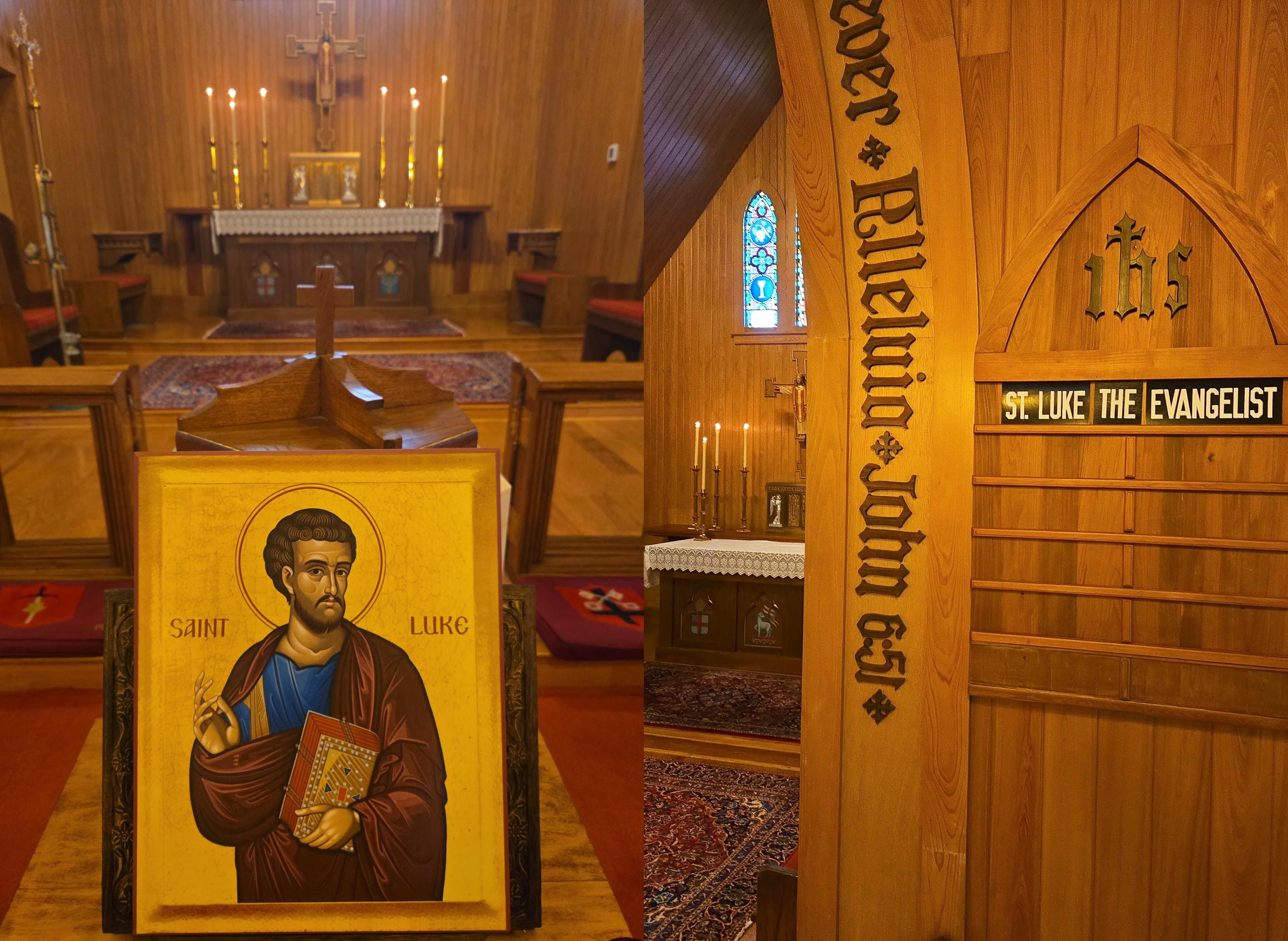
In the audio provided, both lessons are read, and then followed by a homily by yours truly.
A Lesson from the Gospel according to S. Luke, 1.1
Inasmuch as many have undertaken to compile a narrative of the things which have been accomplished among us, just as they were delivered to us by those who from the beginning were eyewitnesses and ministers of the word, it seemed proper to me also, having followed all things closely for some time past, to write a careful and thorough account for you, most excellent The-oph′ilus, that you may know the truth concerning the things of which you have been informed.
A Lesson from his commentaries on the Gospel of S. Luke and the Acts of the Apostles by the Ven. S. Bede
The blessed evangelist Luke as he set out to write about all that Jesus did and taught, until the day on which He was taken up, first took care to refute the audacity of those who wrote falsehoods about Him: that is to say, silently warning the reader that he should know not only that what Jesus preaches must be obeyed, but that those things these people expressed to the contrary must be utterly detested; and, lest by chance the weak be exposed to error, that reading authors who carelessly write superfluous things must be absolutely avoided. For it is not about everyone in general, but about certain persons gifted with the virtue of special faith or knowledge that it could be said, “And if they drink any deadly thing, it will not hurt them” (Mark 16.18). It is said in the prologue of Luke’s gospel that it seemed proper to him that he write a careful and thorough account, inasmuch as many have undertaken to draw up such a narrative. However, we should not accept those who possess no authority in the Church, because they could not carry out what they had undertaken at all. Luke, however, not only carried his narrative down to the resurrection of the Lord and to His being taken up, so that by his labor he should have a worthy place among the four writers of the gospels; he extended it to those things that the apostles did which he believed would avail for the building up of the faith of his readers and hearers. He so wrote that his book alone should be held worthy of belief in the Church among those which tell the story of the acts of the apostles. All those are to be rejected who have ventured to write of the apostles’ deeds and words without the faith that is needful. Mark and Luke indeed wrote at a time when they could be judged, not only by the Church of Christ, but also by those apostles who still remained in the flesh. For through the Lord’s will it was brought about that the words and deeds of Christ were put together in written form, not only by the apostles who saw Christ, but also by disciples who learned of Him by hearing, so that subsequent teachers in the Church might be supplied with confidence and authority for preaching and writing about those things which they had not seen. The blessed Luke wrote an account of the acts of the apostles, just as he himself had seen them, and especially those of the blessed Paul, whose inseparable traveling companion he was.


